


 English
 Spanish
 French
 German
 Italian
 Chinese (Simplified)
 Japanese
 Korean
 Arabic
 Portuguese

 Send Inquiry
Deionisation Plant
Price 150000 INR/ Plant
MOQ : 1 Plant
Deionisation Plant Specification
- Noise Level
- Less than 70 dB
- Flow Rate
- 250-20,000 LPH
- Feature
- Compact design, corrosion-resistant, low maintenance
- Pump Type
- Centrifugal/Vertical multistage
- Water in conductivity
- 500-2000 S/cm
- Recycle Rate
- Up to 98%
- Water Out Conductivity
- <1 S/cm
- Power Consumption
- 1-3 kW (depending on capacity)
- Usage & Applications
- Laboratories, pharmaceuticals, hospitals, boiler feed, electronics
- Technology
- Ion Exchange Resin Technology
- Frequency
- 50/60 Hz
- Efficiency (%)
- Up to 98%
- Ph Level
- 6.5-7.5
- Product Type
- Deionisation Plant
- Purity Level
- >99%
- Material
- FRP/SS/PP
- Water Source
- Borewell, municipal, or well water
- Volume
- Customizable, standard 500-10,000 L
- Automatic Grade
- Automatic/Semi-Automatic
- Voltage
- 220-240 V
- Drive Type
- Electric motor-driven pump
- Power Source
- Electric
- Filter Type
- Multi-grade, Micron filter
- Capacity
- From 250 to 20,000 liters/hour
- Installation Type
- Skid-mounted/Containerized
- Control Panel
- PLC-based/Manual
- Display
- Digital Conductivity/Flow meter
- Inlet/Outlet Connection Size
- 1" to 4" (customizable)
- Pre-Treatment Requirement
- Sediment and Activated Carbon Filtration
- Maximum Operating Temperature
- 45C
- Service Life
- Up to 10 years (with proper maintenance)
- Resin Type
- Cation and Anion Exchange Resin
- Regeneration Method
- Automatic/Manual chemical regeneration
- Structural Coating
- Epoxy/Polyurethane coated (if MS)
- Operating Pressure
- 2-4 kg/cm2
- Compliance Standards
- Meets IS/ASTM standards
Deionisation Plant Trade Information
- Minimum Order Quantity
- 1 Plant
- Supply Ability
- 2 Plants Per Month
- Delivery Time
- 10 -12 Week
- Main Domestic Market
- All India
About Deionisation Plant
Being a trusted entity, we are consistently engaged in providing optimum quality industrial Deionisation Plant in several specifications. At our highly advanced production set-up, the offered plant is manufactured using supreme grade components and pioneering techniques. Widely used for deionisation of water for several commercial as well as industrial applications, the offered plant is much cherished in the market. In addition to this, our clients can avail this durable Deionisation Plant at reasonable prices from us.
Deionisation Plant Features:
- Efficient functionality
- Ensures excellent filtration
- Longer life
- Negligible maintenance
* Terms And Conditions Apply*
Comprehensive Water Purification Technology
Utilizing ion exchange resin technology, the Deionisation Plant delivers ultrapure water for critical uses in laboratories, electronics, and pharmaceuticals. Its dual cation and anion resins remove dissolved solids, achieving water purity levels exceeding 99%. Pre-treatment with sediment and activated carbon filtration ensures optimal performance and resin longevity.
Flexible Design and Reliable Operation
The system offers wide-ranging operational choices, from automatic to manual control, and adapts to diverse site conditions with customizable volumes and connection sizes. Constructed from FRP, SS, or PP, and coated for corrosion resistance, it meets IS/ASTM standards and maintains optimum operation even at temperatures up to 45C.
Efficient, Low-Maintenance, and User-Friendly
With digital monitoring of conductivity and flow, plus options for skid-mounted or containerized installation, the plant provides ease of operation and minimal maintenance. Highly efficient, with recycle rates up to 98%, it consumes only 1-3 kW of power, making it suitable for continuous use in demanding environments.
FAQs of Deionisation Plant:
Q: How does the deionisation plant purify water to achieve high conductivity standards?
A: The plant employs cation and anion exchange resins to remove dissolved ions from incoming water, drastically reducing conductivity to below 1 S/cm. Multi-grade and micron filtration further enhance water quality before ion exchange.Q: What type of control panel options are available for operating the deionisation plant?
A: Users can choose between PLC-based automated panels or manual controls, allowing flexibility based on operational preferences and specific site requirements.Q: When is automatic chemical regeneration recommended over manual regeneration?
A: Automatic regeneration is recommended for processes requiring consistent water quality without frequent manual intervention, while manual regeneration suits applications with less frequent demand or specific chemical handling protocols.Q: Where is the deionisation plant typically used?
A: This plant is widely deployed in laboratories, hospitals, pharmaceutical manufacturing, boiler feed systems, and electronics production, wherever ultrapure water is necessary for sensitive operations.Q: What is the process for installing the deionisation plant?
A: Installation is adaptable; plants can be skid-mounted or containerized. Pre-treatment units, piping, electrical connections, and digital meters are integrated during set-up, usually facilitated by the exporter, manufacturer, or supplier.Q: What are the main benefits of using this plant in industrial and laboratory settings?
A: Key advantages include over 99% purity levels, high operational efficiency up to 98%, low maintenance demands, compact footprint, corrosion-resistant materials, and compliance with global water quality standards.Q: How long is the typical service life of the deionisation plant and what factors influence it?
A: With proper maintenanceincluding regular resin regeneration and timely pre-filter replacementthe plant can serve up to 10 years, ensuring long-term cost efficiencies and reliability.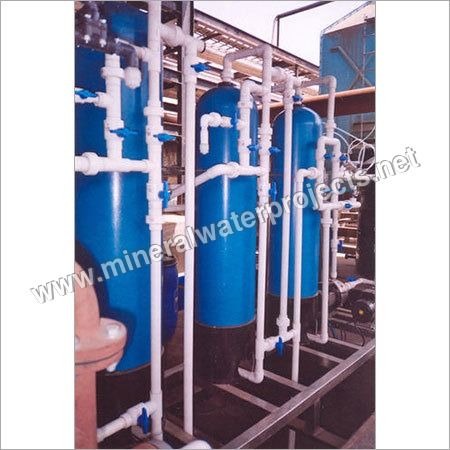
Tell us about your requirement

Price:
Quantity
Select Unit
- 50
- 100
- 200
- 250
- 500
- 1000+
Additional detail
Mobile number
Email

More Products in Water Treatment Plant Category
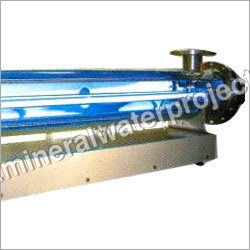
Ultraviolet Water Systems
Price 150000 INR / Plant
Minimum Order Quantity : 1 Plant
Filter Type : Quartz Sleeve Filtration
Material : Stainless Steel
Product Type : Ultraviolet Water System
Power Source : Electric
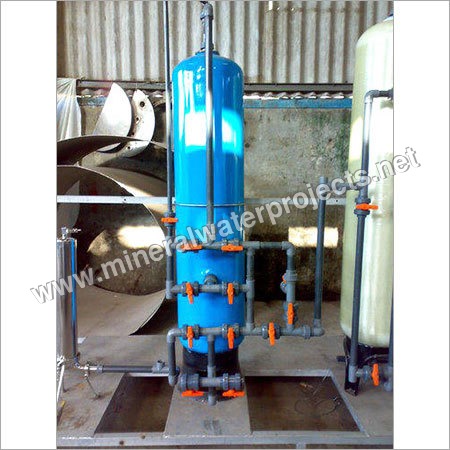
Mixed Bed DM Plant
Price 150000 INR / Plant
Minimum Order Quantity : 1 Plant
Filter Type : MultiGrade
Material : FRP, Stainless Steel
Product Type : Mixed Bed DM Plant
Power Source : Electric
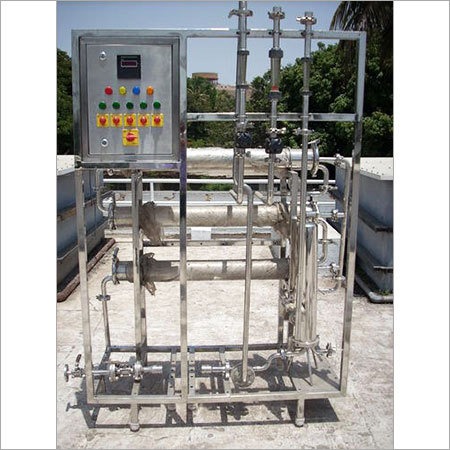
Commercial Reverse Osmosis Plant
Price 150000 INR / Plant
Minimum Order Quantity : 1 , , Plant
Filter Type : MultiStage Filtration (Sand, Carbon, RO)
Material : Stainless Steel
Product Type : Reverse Osmosis
Power Source : Electric
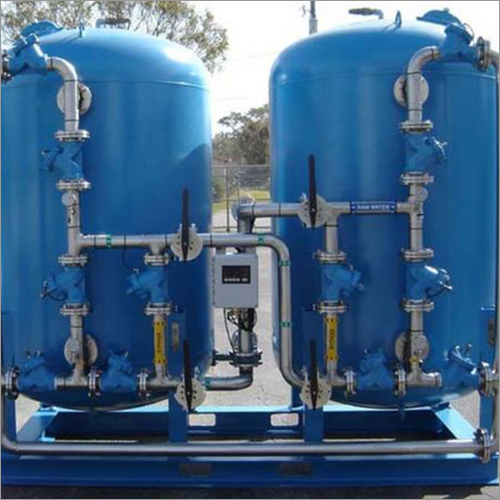
Water Softening Plant
Filter Type : Multilayer filtration
Material : Mild Steel
Product Type : Water Softening Plant
Power Source : Electric


|


Contact Details
GST : 27BNPPJ7839D1ZK
- Gala No.5, Bld. No. 6, Parsawanath Indl. Est., Kolekar Pada, Waliv Village, Vasai East,Vasai - 401208, Maharashtra, India
- Phone : 08045801810
- Mr Bhavesh (Partner)
- Mobile :08045801810
- Send Inquiry
 Send Inquiry
 Inquiry Form
 |
NISHU ENTERPRISES
All Rights Reserved.(Terms of Use) Developed and Managed by Infocom Network Private Limited. |
